Engineered Bamboo at Scale: Lessons from the Bamboo Airport
The world's largest engineered bamboo ceiling is in Bengaluru's airport. How it was specified at scale, and what it would take to build the same in Australia.
Engineered Bamboo in Design: Lessons from the Bamboo Airport
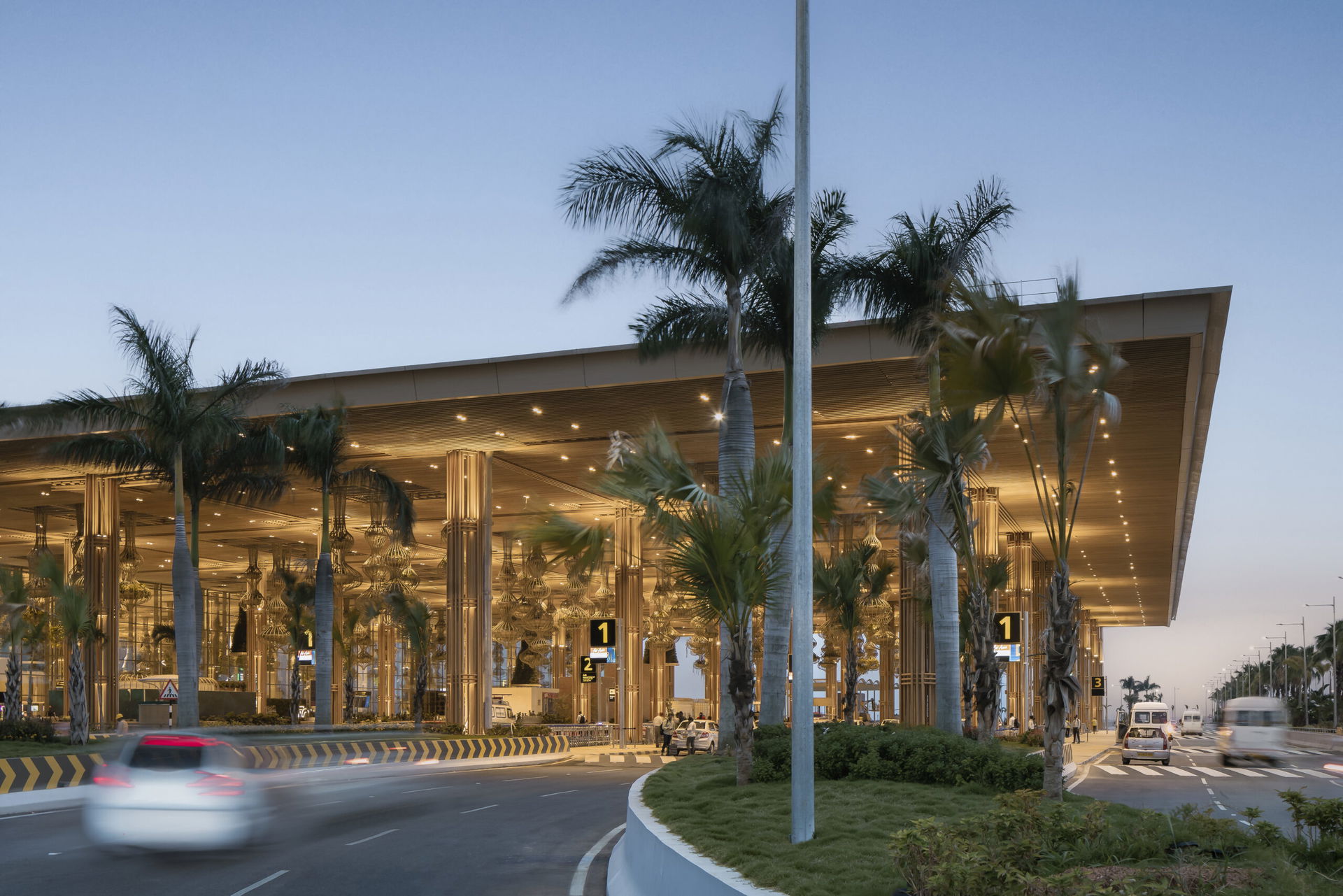
When Terminal 2 at Bengaluru's Kempegowda International Airport opened to travellers, most of the coverage went to the gardens. The hanging plants, the waterfalls, the "terminal in a garden" concept by architects Skidmore, Owings & Merrill. The press quickly tagged it the bamboo airport, and look up and you see why. The ceiling that filters daylight across that terminal is engineered bamboo, laid in cross-stacked layers and tubes across a scale that had never been attempted before.
It is, by a clear margin, the largest engineered bamboo ceiling installation in the world. The previous record holder, Madrid's Barajas airport, used around 200,000 square metres of bamboo ceiling panels. Bengaluru surpasses it in both volume and value. That alone makes it worth a close read for anyone specifying materials on large projects.
One point is worth getting right early. This is not a bamboo building in the structural sense. The terminal's primary frame is long-span steel trusses with a domestically produced roof. The bamboo does the ceiling soffit and the pillar cladding. What lifts it above decoration is the sheer scale, and the fact that SOM had not used engineered bamboo before this project chose it anyway.


Why the ceiling was built from engineered bamboo
The brief was a garden, and the ceiling had to read like one. The design needed a material that filtered daylight the way a canopy does, warm and natural overhead, carried right through the terminal and out to the covered areas. Raw bamboo poles could never deliver that at this scale. They are never the same shape twice and they crack as temperature and humidity move, which rules them out the moment you need a consistent plane held across hundreds of thousands of square metres.
Engineered bamboo solved it. Thin strips are milled, laminated under pressure into solid and hollow tubes, then treated to meet fire and durability requirements. Made this way the material holds tight tolerances and behaves predictably for the life of the building, while keeping the grain and colour the garden concept was reaching for. It brought three things to the project at once: the natural look the architects wanted, the consistency the build needed, and enough structural integrity in the ceiling system to cut back the secondary supports the design would otherwise have carried.


What it takes to use engineered bamboo at scale
Across both Bengaluru and Madrid, the same three pressures shaped the work, and they are the reason these projects are useful evidence rather than just nice pictures.
The first was appearance, held consistently across hundreds of thousands of linear metres. A feature material can hide a bit of variation. A ceiling this size cannot, because the eye reads the whole plane at once and any inconsistency shows. The second was fire and safety, met without exception, because these are buildings where very large numbers of people gather under one roof. The third was durability and service life, with an owner needing certainty the material would still be performing decades after handover.
Bengaluru cleared all three, on a public building of the most regulated kind, at record scale. That is the part worth holding onto. The bamboo did not get in because it looked good. It got in because it was documented against the same demands as every other material on the job, and it held up.

Specifying engineered bamboo in Australia
Nothing at this scale has been built in engineered bamboo here yet, so the honest framing is a parallel rather than a precedent. The materials and the manufacturing exist. The question is what an Australian project would need to put in place to reach the same standard, and that is mostly a matter of the design community building familiarity with bamboo as an engineered product rather than a decorative one.
Match durability to the climate
Bengaluru's bamboo was treated and laminated specifically to survive humidity and temperature swings. Australia's climate zones run from tropical Queensland to alpine, and a product specified for one is not automatically right for another. Durability classification and a clear maintenance regime belong in the conversation early, particularly for any covered outdoor application.
Tolerances and the fixing system
The terminal worked because the tubes were made to tight tolerances and installed through a dedicated ceiling system, not improvised on site. Concealed-fix batten and track systems, prefinished panels, and proper documentation for the design team are what turn a good material into a buildable one. Specifying the product without specifying how it fixes is where bamboo jobs come unstuck.
Sustainability and stored carbon
The carbon story is the one architects and designers have the most to gain from understanding. The Bengaluru ceiling stores roughly 2,650 tonnes of CO2 across its life, a figure published against the project rather than estimated loosely. As engineered bamboo moves from feature material to specified building product, learning to ask for that kind of evidence, and to read it properly, is what lets the sustainability case stand up on a real project rather than sitting in the brochure.

Bringing engineered bamboo to Australian projects
Bengaluru is proof of scale. It shows engineered bamboo can clear the appearance, fire and durability demands of one of the toughest building types there is, and do it across a record-breaking area. What has been missing locally is the confidence to specify it, and the documentation to carry that specification through approval.
That is a solvable problem, and the supply side is closer than it looks. The engineered bamboo on a project of this calibre comes out of a small number of specialist factories with the presses and treatment processes to hold those tolerances. House of Bamboo sources from the same partner factory behind work at this level, which means the skill and precision that built the Bengaluru ceiling are available to Australian projects through a local supplier who understands the specification path.
The garden city built its airport ceiling on exactly that discipline. There is no reason an Australian project of ambition cannot do the same.



.jpg?width=1920&quality=80&format=auto)