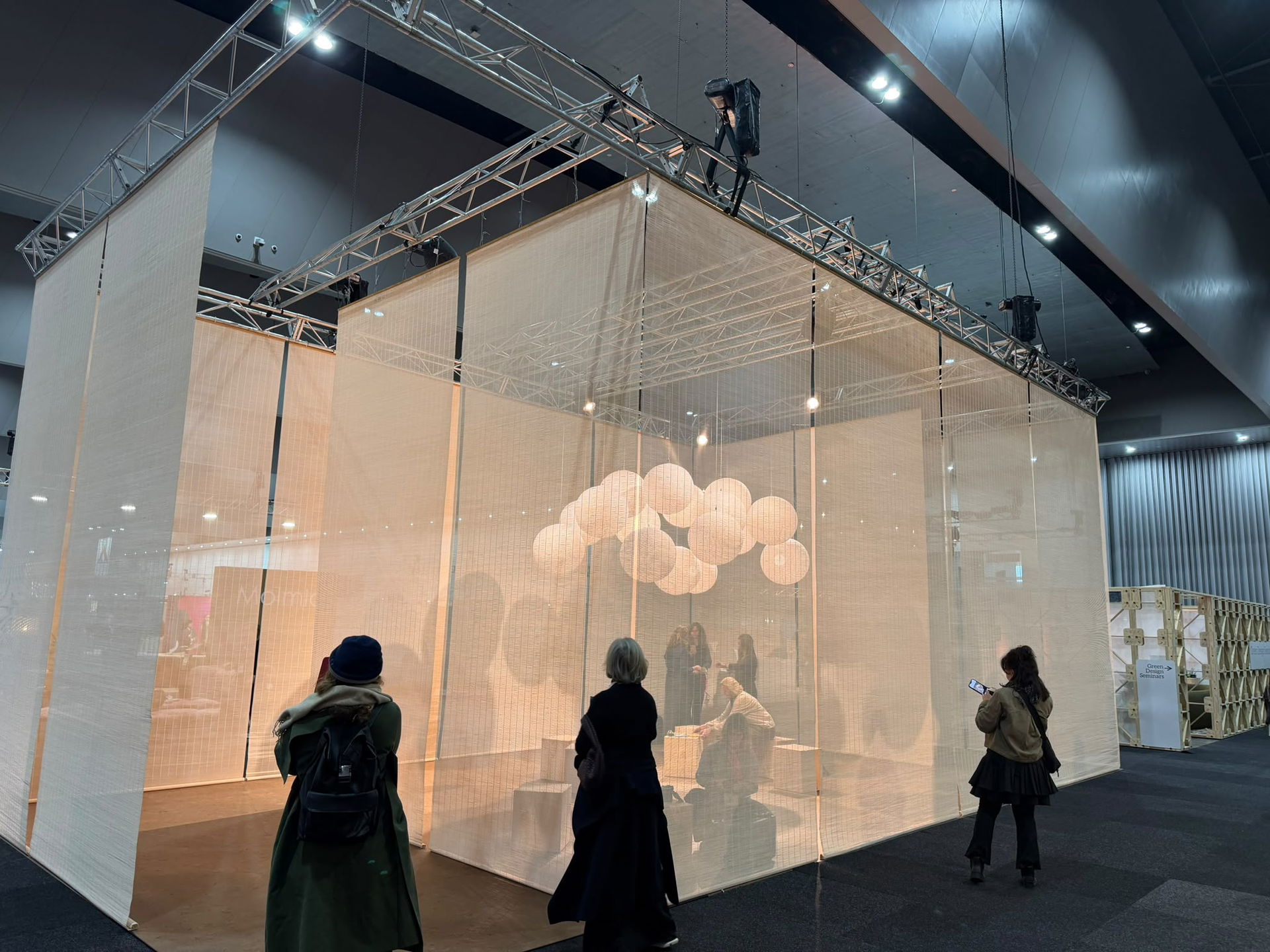
Three Verified Bamboo EPDs: The Embodied Carbon Numbers, From Harvest to Site
House of Bamboo now holds three published Environmental Product Declarations across its engineered bamboo ranges. Each is independently verified, built to the international standard, and valid through to September 2030. For architects and specifiers, that means product-specific carbon numbers you can use and defend, rather than a general claim the bamboo category has rarely been able to back.
Three Verified Bamboo EPDs: The Embodied Carbon Numbers, From Harvest to Site
House of Bamboo now holds three published Environmental Product Declarations across its engineered bamboo ranges. Each is independently verified, built to the international standard, and valid through to September 2030. For architects and specifiers, that means product-specific carbon numbers you can use and defend, rather than a general claim the bamboo category has rarely been able to back.
Embodied carbon is now a line item, not a nice-to-have
Embodied carbon has moved from a nice-to-have to a line item. Project teams are now asked to account for the carbon built into their materials, and the rating tools reward the products that can prove it. A material without verified data is becoming a harder material to specify, whatever its other merits.
That is the gap these declarations close. Here is what they put within reach for the people doing the specifying:
- A verified embodied-carbon figure that drops straight into a project's carbon budget or life cycle assessment.
- Numbers built to EN 15804, so bamboo compares like-for-like against timber, CLT or composite.
- Independent verification and a live registration number to point to when a client or certifier asks how you got there.
- Three separate declarations, so you can choose the lowest-footprint product for the job rather than carrying a blunt average.

A specifier should not have to take our word for our environmental impact. An EPD puts that judgement in the hands of an independent verifier and lays the whole journey out, from harvest to site. This is the way the industry is heading, and we want bamboo to be one of the easiest materials to understand and specify.
Jennifer Snyders, CEO, House of Bamboo
What an EPD actually verifies, and why it carries weight
An Environmental Product Declaration is a Type III environmental label under ISO 14025. In plain terms, it reports a product's measured environmental impact across its life cycle, to a fixed set of rules, so one product can be compared fairly against another.
Ours follow EN 15804, were verified independently by Matthew Fishwick of Fishwick Environmental Ltd, and draw on a life cycle assessment by the IVL Swedish Environmental Research Institute. The figures are not self-declared. That independent check is the difference between a claim and a credential, and it is the reason an EPD carries weight in a Green Star submission where a sustainability statement does not.
Each declaration covers raw material supply, manufacture and freight to Australia (modules A1 to A3), installation (A5) and end of life (C1 to C4), along with the benefits of reuse and recovery (module D), reported per cubic metre of product.

Why three declarations for engineered bamboo?
A single number for bamboo would have been simpler. It would also have been misleading. Our ranges are built for different jobs, with different densities, hardness and manufacturing processes, and those differences move the footprint. Three declarations let you cite the right data for the product actually going in.
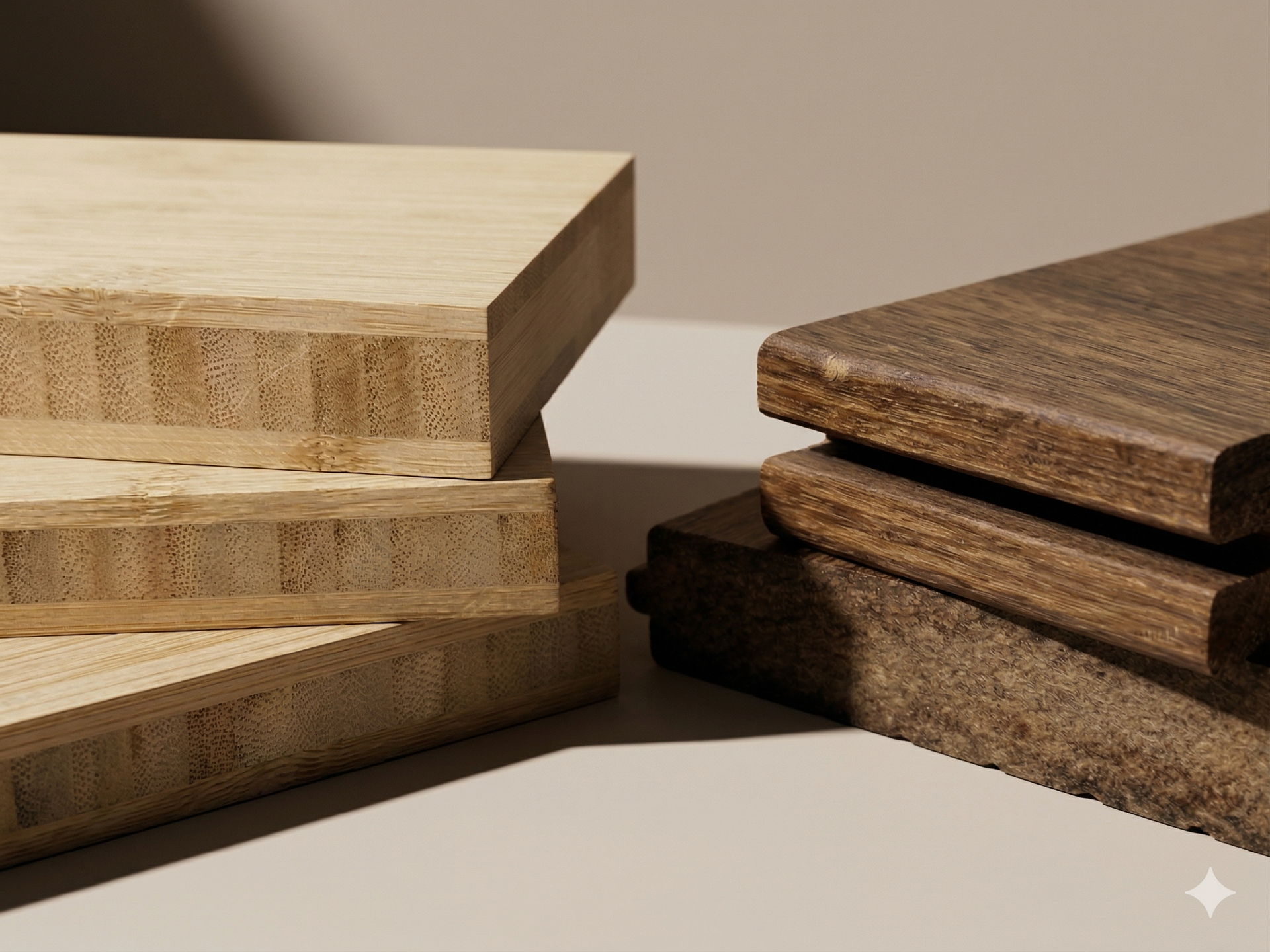
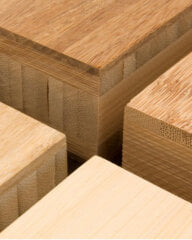
Laminated Bamboo (EPD-IES-0026248) is the versatile interior and exterior range: flooring, cladding, wall and ceiling panels, veneers and beams. It runs at around 680 kg per cubic metre with a Janka hardness of 1,380 lbf, in profiles from fine 0.6 mm veneers up to large sections.
Structural Glued Bamboo (EPD-IES-0026317) is the heavier structural range: beams, lumber, large and curved profiles, decking and cladding, in lengths up to 16 metres. It shares the laminated range's density and hardness but is built for span and load.
Strand Woven Bamboo (EPD-IES-0026316) is the dense, carbonised range made for the outdoors and for traffic: exterior decking, facades, structural members and hard-wearing surfaces. At roughly 1,200 kg per cubic metre and a Janka hardness of 3,820 lbf, it is considerably harder than most hardwoods, and it carries tested slip ratings for wet and dry conditions.

What the carbon numbers actually say
At the product stage, from raw material through manufacture and freight to Australia, all three ranges record a net-negative climate figure per cubic metre: laminated bamboo at −596, structural glued at −505 and strand woven at −106 kg CO₂ equivalent. Bamboo grows fast and holds a great deal of carbon, and at the factory gate each cubic metre stores more than was emitted to make it and ship it here.
The stored carbon is biogenic, drawn down as the bamboo grew, and much of it is released if the material ends up in landfill. So the declarations also report the end-of-life stages and the recovery credits, and the fossil-only emissions: 732, 814 and 1,550 kg CO₂ equivalent for the laminated, structural glued and strand woven ranges. Strand woven sits highest because it is the densest and most processed, which is exactly why it earns its own declaration rather than disappearing into an average.
For an architect, the takeaway is practical. These figures drop straight into a project's embodied carbon budget, they hold up when a client or certifier asks how you reached them, and because each range reports separately, you can specify the lower-footprint product for the job.

The freight question, and how bamboo compares to European CLT
A fair question about any imported material is how far it travels to reach site, and the declarations are open about it. Our bamboo makes a sea journey of roughly 8,400 km from southern China, and that leg is already counted inside the product-stage figures above rather than added on separately. On the freight data, it works out at about 135 kg CO₂ equivalent per tonne of product shipped.
That number means more when you read it against the market. A large share of the CLT specified in Australia is shipped from Europe, because local supply is limited, and that is a much longer haul. The route from Genoa through the Suez Canal runs around 18,200 km and carries roughly 294 kg CO₂ equivalent per tonne. On a per-tonne basis, the European CLT freight leg carries about 2.2 times the transport emissions of the bamboo route.
Both figures use the same method and the same emission factor, which is what makes this a fair comparison rather than a selective one.1 Imported does not mean excessive, and the figures are there to be checked rather than asserted.
How the EPDs support a Green Star submission
The EPDs do not sit on their own. Alongside them, our products carry a Global GreenTag GreenRate Level A certification and a Platinum HealthRate, covering responsible sourcing and low-emission, healthy material content. For a project team, the combination is what counts: verified EPDs and GreenTag both feed the responsible products and materials credits that Green Star rewards, and the HealthRate supports the indoor environment quality side of the same submission.
The intent throughout has been to make these materials easier to understand and easier to specify. A specifier can now take the published figure straight into a calculation, point to an independent verifier, and reference a live registration number rather than building a case from first principles.

What it comes down to for specifiers
Bamboo has always been easy on feel and harder on data. It has had to prove itself within protocols and standards written around timber, and these declarations help bridge that gap. The carbon is verified, the method is published, and the figures are specific to the product you are choosing.
"It would have been easier to publish one number for bamboo. It would also have been wrong. Different products do different jobs, and a specifier deserves the figure that matches what they are actually building with."
Jennifer Snyders, CEO, House of Bamboo
All three declarations are registered with the International EPD System through EPD Australasia and remain valid until 25 September 2030. You can look them up by their registration numbers on the EPD Australasia register at epd-australasia.com/epd-search, or our team can supply the documents and the specification detail for any project.
If you are weighing bamboo against timber, CLT or a composite on a current job, these are the numbers to put beside it. We would rather you specify from verified data than from a brochure, and now you can.
- Shipping distances from SeaRoutes, multiplied by the UK BEIS and Defra container-ship emission factor of 16.14 g CO₂ equivalent per tonne-kilometre, a standard reference used in corporate greenhouse gas reporting


.jpg?width=1920&quality=80&format=auto)