A quiet room made of bamboo:inside the [Lifed] Pavilion at the Green Design Show
House of Bamboo's engineered bamboo matchstick screening forms the walls of the [Lifed] Pavilion at the Green Design Show, Melbourne, 15 to 17 July. See how woven bamboo creates calm, light-filtered spaces at architectural scale.
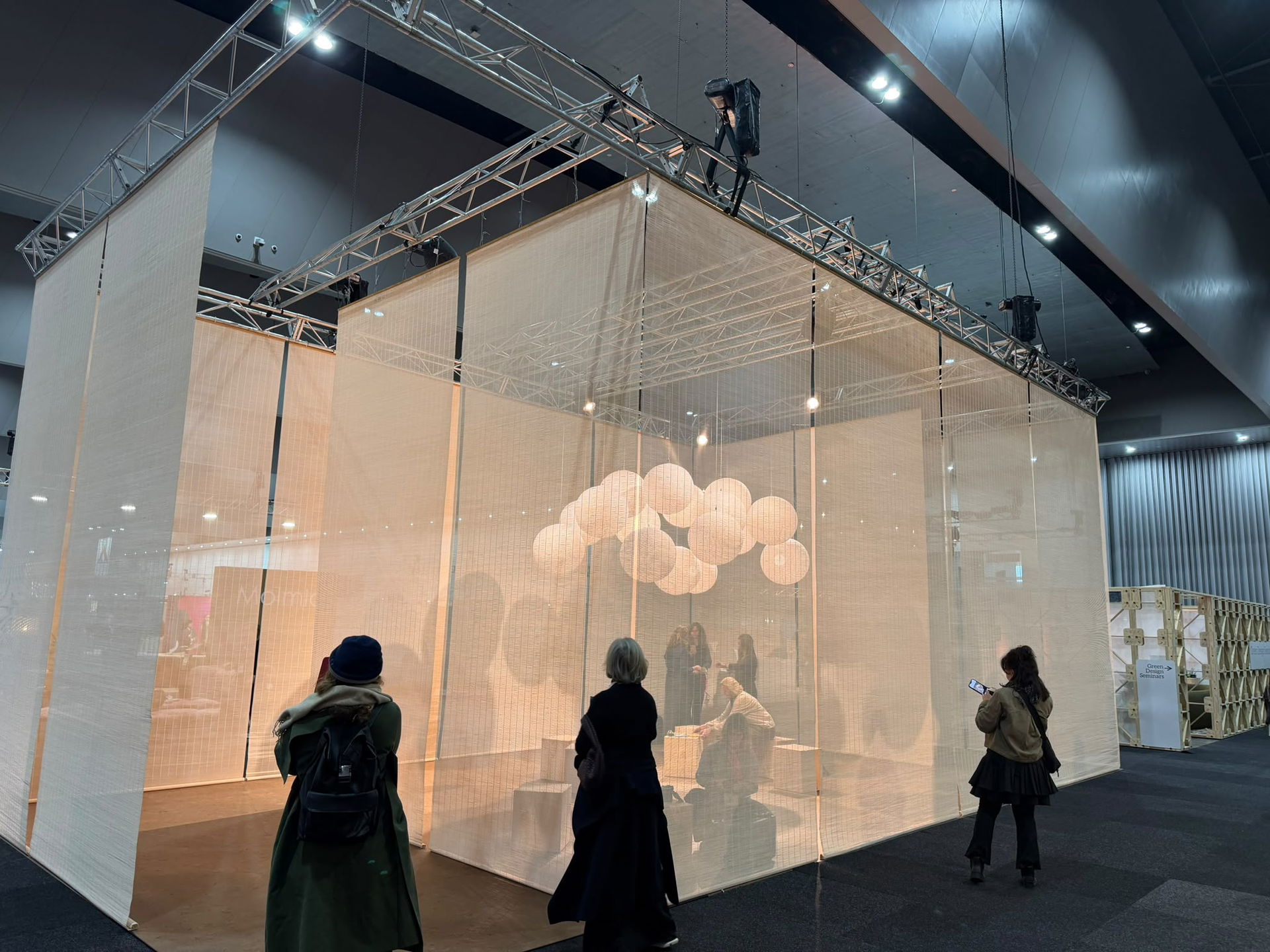
A quiet room made of bamboo:inside the [Lifed] Pavilion at the Green Design Show
House of Bamboo's engineered bamboo matchstick screening forms the walls of the [Lifed] Pavilion at the Green Design Show, Melbourne, 15 to 17 July. See how woven bamboo creates calm, light-filtered spaces at architectural scale.
[Lifted] with Bamboo
Trade shows are loud. Ten thousand design professionals, hundreds of stands, and light that flattens everything it touches. So when the brief for the Green Design Show pavilions called for spaces that demonstrate circular design rather than simply talk about it, the answer at the [Lifed] Pavilion was to build a room that asks you to slow down.
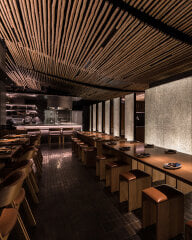
Step through the bamboo screening and the show falls away. Full-height panels of our engineered bamboo matchstick weave hang from the truss like woven walls, filtering the exhibition lighting into something softer. A cloud of paper lanterns floats overhead. Solid timber blocks by Mark Tuckey give people a reason to sit, put their phone down and stay a while. The floor is cork underfoot. Nothing in the room is shouting, which at a trade show turns out to be the loudest move of all.

Matchstick weave at architectural scale
Most people know bamboo matchstick blinds as a window treatment. The pavilion shows what the same material can do when you think of it as a building element instead: bamboo panels for walls, screening, and spatial division. Hung as floor-to-ceiling drops, the fine woven bamboo reads as a translucent skin. From outside, the pavilion glows. From inside, silhouettes of the show move past like shadow play, present but muted.
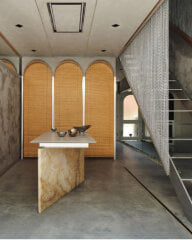
That dual quality, privacy without enclosure, is what makes woven bamboo screening so useful in commercial and residential interiors. It diffuses light rather than blocking it, softens acoustics, and adds texture that flat plasterboard never will. Architects and designers walking the show can see the effect at full scale rather than guessing from a sample swatch.
-320x427.jpg)
Why bamboo belongs in a show about circular design
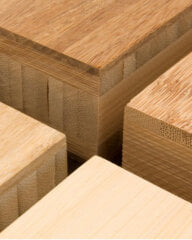
The Green Design Show is governed by sustainability guidelines from Circular Design Thinking, the event's official sustainability advisor, and every pavilion had to meet requirements around sustainable stand construction. Bamboo makes that brief straightforward. It is one of the fastest-growing plants on earth, regenerating from its own root system after harvest, so no replanting and no clear-felling. As an engineered material, it is stable, lightweight and durable, and at the end of the show the screening panels will be reused and transformed in other projects, which is circular design as practice rather than promise.

People have kept telling me the pavilion felt like a place to breathe, which is so wonderful. It's exactly what bamboo brings to a space: filtered light, softened sound, a natural texture you want to be near and touch. For designers looking for materials that lower a project's footprint without lowering its atmosphere, this is the demonstration.
Jennifer Snyders, CEO House of Bamboo
A collaborative build
The pavilion is a shared piece of work. The concept and creative direction came together with Up To Something and StudioXUS, with furniture by Mark Tuckey and the framework of the Green Design Show and Circular Design Thinking about shaping how it was built. But it was a truly collaborative effort to have such a grassroots project come to life. House of Bamboo supplied approx. 90 square metres of whitewash-engineered bamboo matchstick screening to bring the vision to life, helping shape the design and now planning for its life in the future.

See it this week at the Green Design Show
The Green Design Show runs 15 to 17 July at the Melbourne Exhibition Centre, co-located with Decor + Design and positioned right at the entrance. Entry is free for design trade professionals. If you are specifying materials for interiors, walk through the pavilion before you leave. Then come and talk to us about what bamboo screening, matchstick shades and bamboo panels can do in your next project.
-320x240.jpg)
The pavilion shows what bamboo does best. It creates calm. The moment you step inside, the noise of the show drops away and the light changes. That is not decoration; that is the material working. When you can achieve that with one of the most rapidly renewable resources on the planet, the case for using bamboo in commercial spaces makes itself
Jennifer Snyders, House of Bamboo CEO
.png?width=1920&quality=80&format=auto)