Explore outdoor room ideas for Australian homes, from bamboo decking and natural screening to pergolas and sustainable materials. Discover how engineered bamboo helps create outdoor spaces that feel connected, durable, and designed for modern living
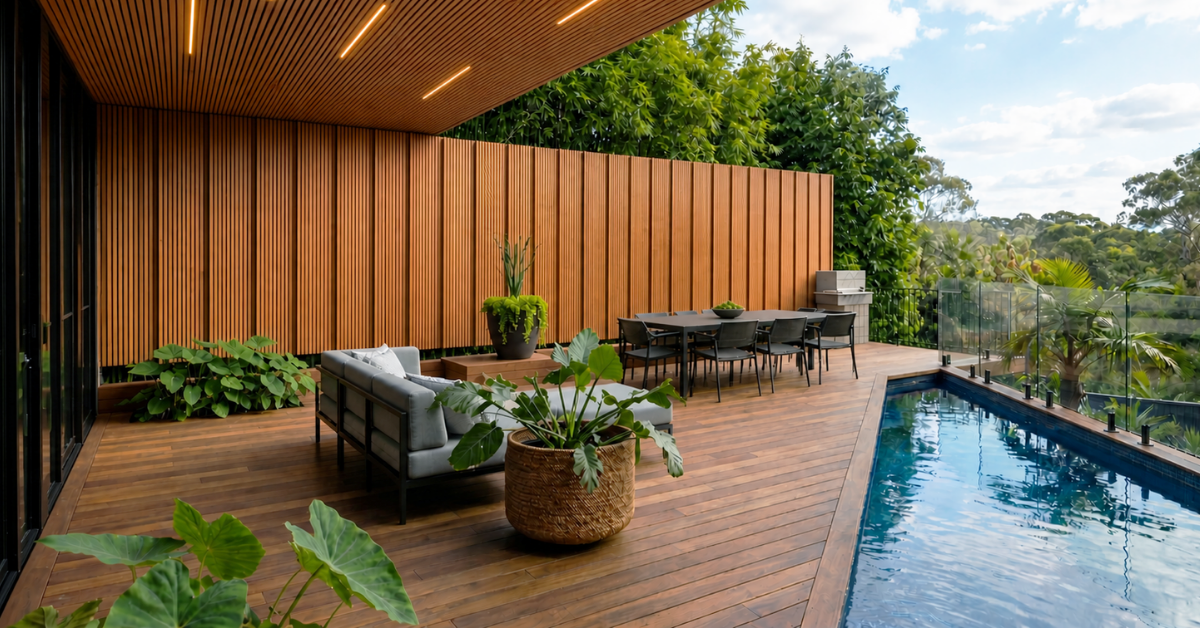
Explore outdoor room ideas for Australian homes, from bamboo decking and natural screening to pergolas and sustainable materials. Discover how engineered bamboo helps create outdoor spaces that feel connected, durable, and designed for modern living
Outdoor Room Ideas for Australian Homes: Design, Materials and What to Specify
The line between inside and outside has been blurring for years. What started as a trend has settled into something more permanent: homeowners who invest seriously in Australian properties now expect the outdoor living space to perform at the same level as the interior. Not a deck with a few chairs. A proper outdoor room. One that reads as intentional, handles local weather, and holds its finish for longer than a season.
For landscapers working at the premium end, this shift is an opportunity. The brief is no longer just planting and paving. It's atmosphere, material quality, and how everything connects back to the architecture of the house.
Outdoor Room Ideas for Australian Homes: Design, Materials and What to Specify
The outdoor living conversation has matured. Homeowners aren't just asking for more space outdoors. They want a space that functions: somewhere to eat, entertain, and genuinely spend time without feeling exposed or temporary. The design trends reflecting this are easy to read once you know what to look for.
Outdoor kitchens and integrated cooking areas have moved from luxury addition to expected feature in premium builds. Pergolas and covered structures are being treated architecturally rather than as afterthoughts. Planting is being used to create privacy and soften edges rather than purely for aesthetics. And material choices, once an afterthought beyond paving type, are now part of the brief: homeowners are asking what things are made from, how they perform, and how much upkeep is involved.
The shift toward natural materials is real and consistent. Concrete and composite decking dominated a decade ago. What's replaced them in high-end residential projects is a preference for materials with warmth, texture, and a credible sustainability story. Products that look at home in the landscape rather than sitting on top of it.
Outdoor Room Ideas for Australian Homes: Design, Materials and What to Specify
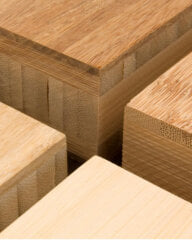
Timber has always been the go-to for outdoor spaces, but specifying hardwood in 2026 comes with baggage: sourcing complexity, movement issues, and maintenance cycles that clients eventually stop keeping up with. Engineered bamboo sits in a different category entirely. It's exceptionally dense and durable, dimensionally stable, and carries genuine sustainability credentials that clients in premium renovations increasingly want to see on paper.
Dasso Decking from House of Bamboo is the product that changes the conversation. Strandwoven and thermally treated at 200°C, it achieves a density of 1200kg/m³. It holds a Class 1 durability rating, a BAL 29 fire rating, and a slip resistance classification that matters around pools and entertaining areas. It comes pre-finished in Cognac or Espresso, installs via a click system, and needs minimal ongoing maintenance. For landscapers, that last point matters: it's an easy handoff to clients who want a beautiful space, not a maintenance schedule.
Outdoor Room Ideas for Australian Homes: Design, Materials and What to Specify
Decking alone doesn't make an outdoor room. What gives an outdoor living space that interior quality is enclosure: screening, texture overhead, something that defines the boundary between the entertaining area and the rest of the garden.
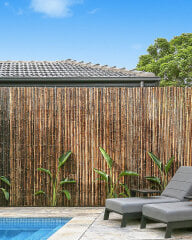
The Organic Series from House of Bamboo is where biophilic design becomes practical. Bamboo Rod Screens in natural, carbonised, or black finish can be used as fencing panels, feature walls, or screen dividers. They read as raw and organic rather than constructed, which sits well against the clean lines of engineered decking. The scale and rhythm of the rods softens hard edges without losing structure.
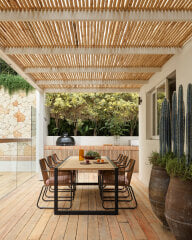
Natureed is the product for overhead applications: pergolas, shade structures, ceiling infill beneath an existing roofline. It delivers the kind of diffused light and textural warmth that designers are currently chasing in hospitality fit-outs, translated directly into residential landscaping.
Outdoor Room Ideas for Australian Homes: Design, Materials and What to Specify
The Bamboo Decking at The Pyrmont is a rooftop garden upgrade completed as part of the City of Sydney's Smart Green Apartments Programme. Landscape architects Adam Robinson and Hamish Chapman used Dasso Decking to transform what was a standard apartment rooftop into a genuinely liveable communal outdoor space. The project shows how well the material reads at scale on an exposed, urban site.
The Bespoke Cane Reed Pergola at Bantry Bay is a different brief entirely. Designed by MacCormick and Associates Architects for a waterfront home overlooking Middle Harbour, the project uses Natureed to line the ceiling of a dramatic steel canopy structure. The result is an outdoor entertaining area where the cane reed softens the hard architecture and draws the eye toward the garden and water beyond. It's a clear demonstration of what Natureed does when it's used with intent: it lets the building sit in the landscape rather than compete with it.
Outdoor Room Ideas for Australian Homes: Design, Materials and What to Specify
Globally, the conversation pit is having a genuine revival. House Beautiful recently covered the trend in depth, noting that what was quintessentially mid-century, beloved from the 1950s through to the 1970s, has returned with an al fresco twist. Designers working at the premium end are seeing clients request outdoor spaces that function as true extensions of the home, and the conversation pit delivers exactly that: a destination within the landscape, rather than just a surface to put furniture on.
The appeal isn't purely aesthetic. There's something about being slightly lowered into the landscape that changes how people inhabit a space. It slows things down. It creates a sense of being held within the garden while still connected to the view beyond. Outdoors, that quality is rare and worth designing for deliberately. The format also encourages a different kind of socialising: less structured than a dining setting, more intentional than scattered chairs around a fire. Everyone faces inward, conversation happens naturally, and the space does the work.
Getting it right comes down to proportion and materials. The pit needs enough depth to feel grounded without feeling like a trench. And the materials have to read as part of the architecture, not bolted on after the fact. That's where the House of Bamboo product range becomes a genuinely strong answer. Bamboo Rod Screens used as the enclosing boundary give the pit definition without closing it off. Dasso Decking on the surrounding platform ties it back to the house. Natureed overhead, on a pergola or shade structure above the seating area, completes the enclosure and brings the whole thing into the landscape rather than sitting on top of it. Natural materials are also specifically what designers are calling for in this context: stone, timber, planting. Bamboo sits squarely in that palette and brings the sustainability story with it.
Outdoor Room Ideas for Australian Homes: Design, Materials and What to Specify
The design trend driving premium outdoor rooms right now is the combination of raw organic material with precise engineered detail. Dasso Decking gives you the precision. Rod Screens and Natureed give you the organic warmth. Used together, the result looks considered rather than assembled.
Outdoor Room Ideas for Australian Homes: Design, Materials and What to Specify
For homeowners weighing up their options, here is what makes this combination worth the investment. Dasso Decking carries a Class 1 durability rating and BAL 29 fire rating, which means it is built for Australian conditions, not adapted from a European specification. The Organic Series products are 100% natural bamboo: no adhesives, no composites, nothing that degrades unpleasantly in heat or UV. Everything in the House of Bamboo range is backed by global sustainability certifications, which matters both for conscience and, increasingly, for property value conversations.
Beyond the specs, it's worth being straight with clients about how these products behave outdoors. Like teak and other quality timbers, bamboo responds to UV exposure over time.
Left uncoated, it will silver off to a natural grey. It's the same weathering process people pay a premium for in teak outdoor furniture. If the client wants to hold the original finish, a clean and an oil reapplication every one to two years is the maintenance commitment. It's manageable, not onerous. Rod Screens and Natureed follow the same logic: they age naturally rather than degrading, and they look better for it. For clients who want a premium outdoor space and realistic upkeep expectations, that's a genuinely different conversation from composite products that chalk, pit, or fade unevenly.
House of Bamboo has been supplying architects and landscapers in Australia for over 50 years. Consistent stock, real technical support, and products that perform exactly as specified. When clients ask what the outdoor space is worth, the materials are a large part of the answer. Get them right and the space holds its quality long after the build is finished.
Explore bamboo decking, rod screens, Natureed and the full range of sustainable outdoor materials at houseofbamboo.com.au
-1.jpg?width=1920&quality=80&format=auto)
.jpg?width=1920&quality=80&format=auto)